
Which language should I learn?
Some musings, but I'm also kind of genuinely asking!

This month’s Creepy Classics story has been adapted from a medieval Irish manuscript - one of the oldest texts written in Old Irish that we have, as it happens (The Book of the Dun Cow). It’s got me back on the dreaded owl app, which I had been avoiding because I avoid generative AI as a general rule and didn’t like what they’ve been doing lately, trying to learn Irish. And Welsh. And I really ought to work on keeping up my French too…
I love languages and I enjoy learning languages, but as someone whose first language is English, I have often struggled with working out which language, exactly, I should learn. European colleagues in Classics and Ancient History are regularly horrified by English scholars’ lack of language skills and complain when they review our books that too much of the secondary literature is in English. But most of us had to learn Latin and Ancient Greek at university, because not many schools teach them (though more do now than when I was at school, I’m glad to say!) so trying to add another language on top of those is hard, and even if we could, which one? I took a course in German for academics while I was doing my PhD, and did a few weeks of Beginners’ Italian too, and I’ve tried to keep my French to a good level over the years. But when you add on Latin and Ancient Greek as well, it all becomes too much.
Perhaps part of the problem is that we’ve tied language learning to “usefulness.” I took German - again, as I also have a GCSE in German, but GCSE level language is pretty useless! - because I was told it was the most useful language for academic study, a rather outdated idea from the early 20th century! Other languages frequently cited as “useful” are Mandarin and Spanish, on the basis of the number of people who speak them worldwide. My best second language by far is French, because France is closest to England and we can actually go there sometimes! And I infamously told my mum, when she tried to encourage me to learn some Latin as an extra-curricular while I was in school, that Latin was a dead language that was only any use for exactly two careers, one of which I couldn’t do because I am the wrong gender for it. Of course, I ended up in the other one, and the lesson is, always listen to your mum, she’s always right!
But I think maybe “usefulness” is not the best approach. For anyone whose first language is not English, there is an obvious “usefulness” to English, and for people who don’t live in England, there’s a “usefulness” to other specific languages - Welsh if you live in Wales for example, or French if you’re an English-speaking Canadian. But if you’re an English-speaker living in England, how can you possibly know which language will be most “useful”?
But you still need something to keep you motivated. I watched a YouTube video the other day (which I’d cite if I could remember what it was called or who made it, sorry!) that said one of the key things you need to put in the time and commitment to learn another language is a reason for doing it. Not “usefulness”, specifically, because it doesn’t have to be about that. But you need some kind of reason, some driving force.
Aside from my ongoing desire to keep improving my French (I do love French as a language, and I also love France and French food, so that’s important to me!) I have bounced between several different languages, thinking about learning them or getting a little way and stopping, over the past few years. I was learning Modern Greek on the owl app for a while and enjoying it, and I’m kind of annoyed I stopped because if I’d kept it up maybe I would understand the Greek version of the sitcom Ghosts without needing subtitles, like the French and German ones! But I didn’t have any compelling reason to keep going, and it sort of fell away.
My son was hard of hearing when he was smaller and I wanted to learn British Sign Language, but I already knew his hearing was going to improve as he grew (he has glue ear) so that reduced the motivation. I kept trying to see if I could make a start with Makaton, which is not a language but shares some vocabulary with British Sign Language, but every website on the subject was so desperate to point out it’s not BSL that I couldn’t find the information I was looking for anywhere and gave up! I’ve also done a lot of work with a colleague in Germany and thought I should have a third go at learning German, which I do speak a tiny bit, but not much. But we’re working together on English literature analysis (a project on Terry Pratchett’s Discworld) so that reduces the motivation there.

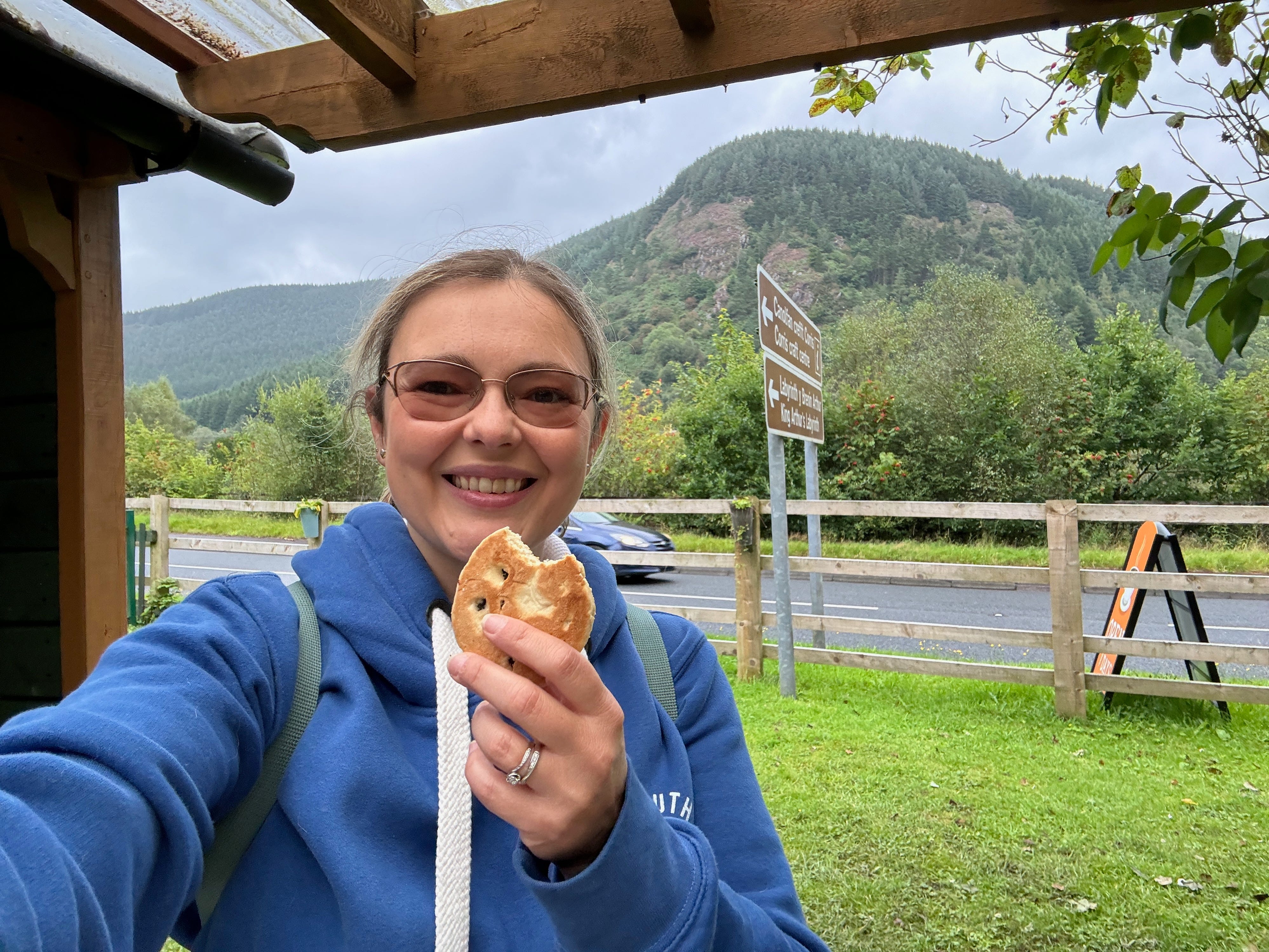
But now we’re back to Irish and Welsh again. I am an Irish citizen and have been since birth, but my Irish family are Northern Irish Protestants, so none of us speak the language. I feel a desire, as a citizen of the country, to learn its language (and I do have quite a few Irish ancestors on the other side of my family from the South!). And then there’s Welsh - my parents have lived in Wales for 20 years, I lived there too for a little while, I should learn the language!
I think I might try learning both, with a little emphasis on Irish. I feel like maybe those deeper reasons for learning the language might be what I’ve been missing. Neither language is especially “useful” unless I want to move to either Wales or the Republic of Ireland and take on one of the jobs that requires the language (teaching assistant, county council, etc. - I know that’s true for Wales because I’ve job-hunted there, I don’t know about Ireland). But maybe that desire to feel like a full citizen of Ireland, or to really feel like someone who has lived in Wales and has family there, might be the motivation I’m lacking.
Personal curriculum update:
Here’s how the three threads of my different kind of personal curriculum for 2026 are going:
Thread 1: Classic Gothic Literature
I’ve had to put The Picture of Dorian Grey on hold so that I can focus on making YouTube videos about the new Frankenstein-adjacent movie The Bride, which is coming out this week, so no new movement on this one!
Classic Gothic literature read so far this year: Wuthering Heights, by Emily Brontë
Thread 2: General folklore
I did lots of dipping in and out of books while researching the latest podcast episode - I had a look at Barry Cunliffe’s A Very Short Introduction To Druids and A History of Ireland in 250 Episodes, by Jonathan Bardon, and well as Ronald Hutton’s always useful Stations of the Sun and J. Borsje’s Understanding Celtic Religion. I haven’t been able to give more sustained attention to anything though.
Thread 3: Popsugar Reading Challenge
I’m still reading The Book That Wouldn’t Burn for the third prompt. It’s really long! And I’ve been very tired… It’s good, though!
Popsugar Reading Challenge 2026 progress:
The Enchanted April, by Elizabeth von Arnim (A book where gardening or a garden is central to the plot)
Sunrise on the Reaping, by Suzanne Collins (A book that features a platonic friendship between a man and woman)
I love learning languages, too! I discovered this while studying abroad in Spain. When I returned home to my university, I changed my major to English and decided to minor in Spanish. Now I'm learning Welsh and French on Duolingo. I love Welsh folklore, and it has been helpful to learn some Welsh in order to better understand the research I do. :)