
Why I'm a Plotter, not a Pantser
Getting started on my summer writing project

My big writing project this summer is to finally get the novel I’ve been planning and researching for 18 months out of my brain and into my computer! In order to do this, I need to produce one final plan to get my thoughts organised, because I am and always have been a Planner, or an Architect in George RR Martin’s terms.
If you haven’t come across this before, the idea is that there are basically two types of writers. Planners, or Architects, plan out the whole story before they start, or at least very early on in the process. Pantsers, or Gardeners, start writing and see what happens. This is a gross over-simplification of course, and there is nothing stopping Planners from doing some free writing or starting with an idea and planning later, and there is nothing stopping from Pantsers from doing an outline or having a plan for where they intend their story to go. But as a description of a general tendency among writers towards one of two writing styles, it mostly works.
Neither method is correct and neither is wrong, and there are pros and cons to both. The biggest advantage of Planning is, of course, that you know where your story is going and can write accordingly, and you may need fewer drafts. But the disadvantages are that it can be more difficult to create really compelling, three-dimensional characters when you need your characters to take specific actions in order for your plot to work, and if you can’t quite get your plan to work, you may find yourself completely stuck.
The biggest advantage of the Pantser method is the ability to find the story as you go, to discover who your characters are as you write, and to let your story go to unexpected places and develop in a way that feels natural, where every action has a consequence and is securely rooted in character. The biggest disadvantage, as fans of self-proclaimed Gardener George RR Martin are well aware, is that you run an even higher risk of getting completely stuck than the Planners, for a different reason. Your story might just peter out, or you might find you’ve written yourself into a hole you don’t know how to get out of.
You can write using either method in any genre, but there are some particular advantages to one over the other in some genres. The world-building that is such a big part of epic fantasy can really benefit from a Gardener approach, as evidenced not just by Martin but also by JRR Tolkien. Tolkien planned and outlined, but his primary method was more a guided form of discovery writing, and of course as fans will remember, The Lord of the Rings became the epic we know rather than a short children’s book because “the tale grew in the telling.”
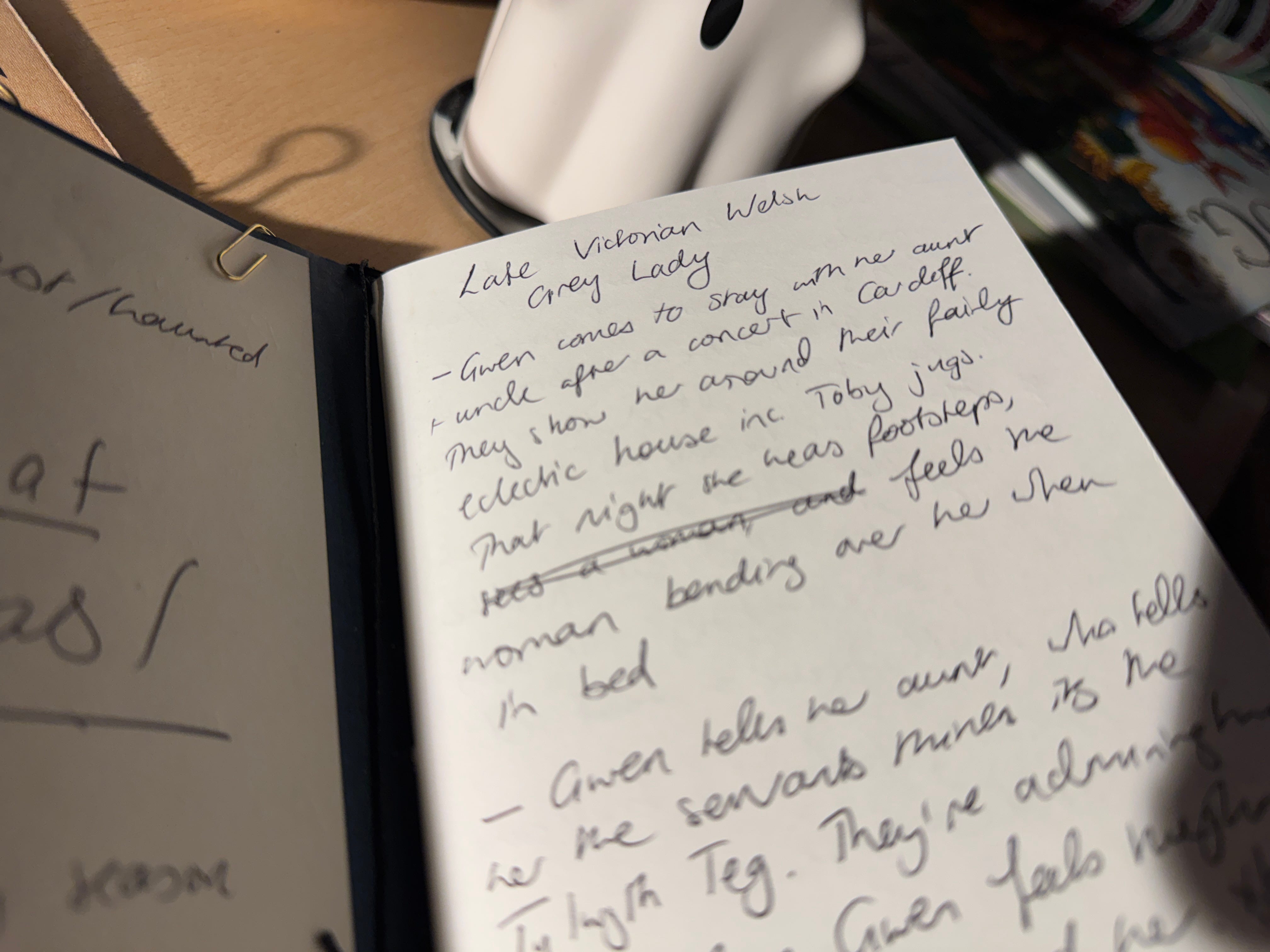
Mystery novels, on the other hand, can benefit from more of a Planned approach. There are mystery writers who can do it with a more Gardener style; notoriously, Ian Rankin doesn’t always know whodunnit when he starts to write. But most mystery authors will plan out their novel beforehand so that they know whodunnit and why and how, and can write to that conclusion. Agatha Christie, for example, was very strict about planning all her novels carefully in advance.
Part of the reason I’m putting so much focus on Planning my novel is because it is also a mystery - a supernatural mystery, to be precise, but still a mystery. It is essentially made up of three connected stories - the story of something that happened that led several people to be very angry at someone in the late 1920s, the story of the murder of that someone in the mid-1930s, and the story of a modern woman haunted (literally - no metaphors here, I like my ghosts properly spooky and definitely real!) by the events of that night and determined to solve the murder. I certainly need to know whodunnit, why, and how before I start to write, which is the core of the second story, but I also want to know the first and third stories as well. In fact, I plan to write them in chronological order, getting the whole of the backstory sorted first, and then seeing how the events it leads to unfold.
There are also practical reasons for favouring the Planner method when you’re trying to write alongside two or three other jobs and parent a small child too. Ideally, I would give myself several weeks to just write, and maybe feed myself and walk the dog, but I don’t have that option. I need to get better at “writing in the cracks,” as Bethany Atazadeh puts it, and be able to make some real progress in a short burst of time. The most effective way to do that is to have a plan I can follow. My plans are fairly loose and generally just outline the main plot beats I need to follow and maybe some sense of chapters, but there are some authors, like Gillian McAllister, who work with much more detailed outlines that are split into individual scenes, and this can be a lifeline when time for writing is short and chopped up into little bits.
And then there’s the simple fact that which style you prefer is ultimately just a question of personality and experience. Although I enjoy just starting writing, I tend to find myself stopping pretty quickly because although I can do some lovely description and world-building that way, I have no idea what the story is. Stories don’t tend to come to me the way they do some writers, and I rarely find my characters doing things I don’t expect, as others do. Most of my writing so far has been adaptations of pre-existing stories, which I often find more inspiring than trying to come up with a new plot myself. My novel is an original story, but heavily inspired by Agatha Christie - that middle story is designed to be a little Agatha Christie-homage, with the first and third stories revolving around it. I’ve also spent years training as an historian and learning to plan essays, articles, books, and theses, so planning chapters and outlining the main points in advance comes naturally to me.
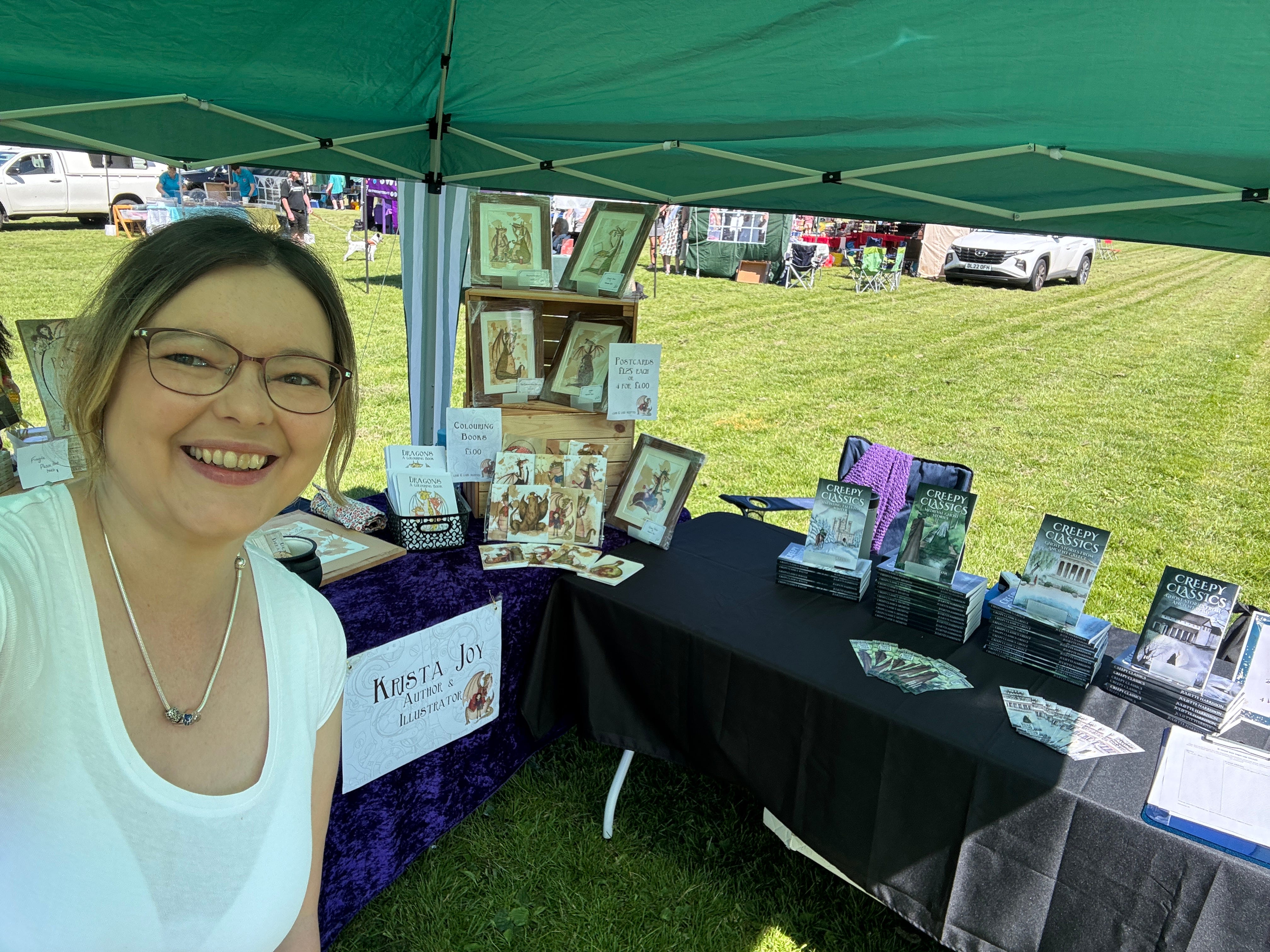
I’m really excited to finally get stuck into this novel! May was a very busy month, with three live events where I was selling and signing my books; two book fairs and a local summer fête. They all went well and I met lots of lovely readers at all three of them! In June, although I have a lot on in terms of family events and personal things, I have a month off from in-person book events, so that’s a bit of time to try to get my head down and get some more writing done.
I have four more live events lined up for this year:
12th July I’ll be at the Coventry Festival of Books at National Trust Charterhouse
8th August I’ll be at Geek Mart at the Uffculme Centre, Birmingham
18th October I’ll be at the Halloween Craft Fair at Himley Hall
21st November I’ll be at the Coventry Book Extravaganza at Albany Theatre
Come and say hi if you’re around for any of these events!
Personal curriculum update:
Thread 1: Classic Gothic Literature
I’ve started reading The Strange Case of Dr Jekyll and Mr Hyde, and I’m really enjoying it so far, even though it’s a bit weird knowing exactly what’s going on when the revelation of the connection between Jekyll and Hyde is supposed to be a mystery and a surprise. But I’ve read and enjoyed Murder on the Orient Express and The Murder of Roger Ackroyd (both Christie) while knowing the solution to both of those, so I still expect to enjoy it!
Thread 2: General History and Folklore
My current non-fiction reading is more current affairs than history, but it’s a related topic - I picked up How to Kill a Language by Sophia Smith Galer after seeing her talk about it on Instagram, and it’s fascinating so far.
Thread 3: Popsugar Reading Challenge
I’ve finally made some proper progress - I got to the end of Revenant! I found it dragged a bit as it went on, possibly because Worf turned up. Dax and Worf have never been my favourite couple, and the way they were written in this book didn’t really feel like them, it was too sweet and soppy - Dax had more chemistry with Kira in this story to be honest. And it all went a bit OTT towards the end. But it was still a good book, and I did enjoy the spooky/creepy elements.
The next prompt is “a book with an overweight main character whose story isn't about losing weight,” and I was going to re-read Terry Pratchett’s Carpe Jugulum for this one, as it fits nicely. But I found I was really in the mood for something I haven’t read before, and I picked up Recipes for an Unexpected Afterlife, by Deston J. Munden, late last year and have been wanting to read it. Honestly, I’m not entirely sure if there’s an overweight character in it, because unless a book is marketed on that basis, you don’t really know that until you read the book. But the main character is a ogre so I’m just sort of hoping there’s someone at least large, if not technically overweight, in the book. Honestly, I’m gonna count it anyway!
Popsugar Reading Challenge 2026 progress:
The Enchanted April, by Elizabeth von Arnim (A book where gardening or a garden is central to the plot)
Sunrise on the Reaping, by Suzanne Collins (A book that features a platonic friendship between a man and woman)
The Book That Wouldn’t Burn, by Mark Lawrence (A book you meant to read in 2025)
Z for Zachariah, by Robert C. O’Brien (A book that starts with the letter “Z”)
Star Trek Deep Space Nine: Revenant, by Alex White (A book about women astronauts)